
For much of the past decade, the story surrounding Phil Collins has centred less on records and more on resilience. Surgeries replaced studio sessions. Recovery timetables overtook release schedules. And yet, even now, after years defined by physical limitation, Collins insists that creativity hasn’t completely left him.
Speaking recently with Zoe Ball on BBC Two, the former Genesis frontman offered an unusually candid account of the health struggles that have reshaped his daily life.
“It’s an ongoing thing,” Collins said. “I have a 24-hour live-in nurse to make sure I take my medication, as I should do.” What followed was a stark catalogue of medical complications. “I’ve had challenges with my knee. Everything that could go wrong with me did go wrong with me. I got COVID in hospital. My kidneys started to back up. Everything seemed to converge at the same time.”
The severity of the situation is difficult to overstate. Collins underwent five operations on his knee alone. “Now, I’ve got a knee that works,” he explained, “and I can walk, albeit with assistance, crutches or whatever.”
The kidney issues, Collins acknowledged, were likely self-inflicted. “Drinking too much” played a role, he admitted, though not in the way stereotypes might suggest. “I wasn’t one of those guys that stayed up all night drinking. I’d drink during the day, but I guess I had too much of it.” He added, “I was never drunk, although I fell over a couple of times. But it is just one of those things that happened, and it all caught up with me, and I spent months in hospital.”
It has now been more than two years since Collins last consumed alcohol. Combined with the slow progress following surgery, the change has brought some stability. “It’s just been a difficult, interesting, frustrating last few years,” he said. “It’s all right now.”
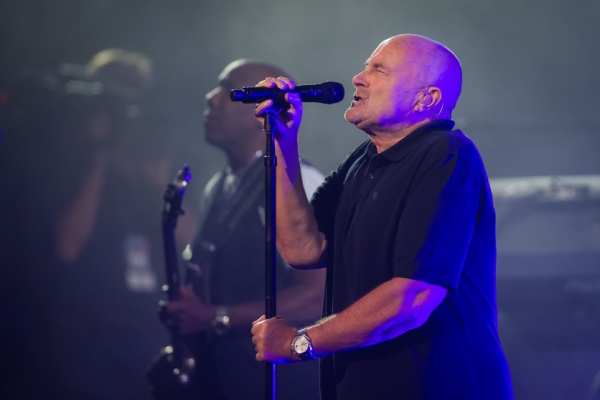
His final live performance came in 2022, closing Genesis’ farewell tour. Already unable to play drums after nerve damage caused by spinal surgery in 2009, Collins performed seated, a visible reminder of how far his body had moved away from the physical demands of his music.
At 74, a return to touring appears unlikely. But recording, he says, remains possible.
“The things that are ahead for me would be, apart from just being back to being totally mobile and healthy, is maybe go in [the studio] and have a fiddle about and see if there’s more music,” Collins said. He acknowledged the psychological hurdle that often follows long careers. “You tend to sort of feel like, ‘That’s it, I’ve done that.’ But you’ve gotta start doing it to see if you can do it. Otherwise, you don’t do it.”
The door, crucially, is not closed.
Collins revealed that ideas already exist. “I’ve got some things that are half-formed or were never finished, and a couple of things that were finished, which I like,” he said, before adding with familiar understatement: “So maybe life in the old dog. You’ll see.”
There is no promise here. No announcement, no deadline, no grand comeback narrative. Just a man who has survived more than most, still willing to sit down, press record, and see what remains.